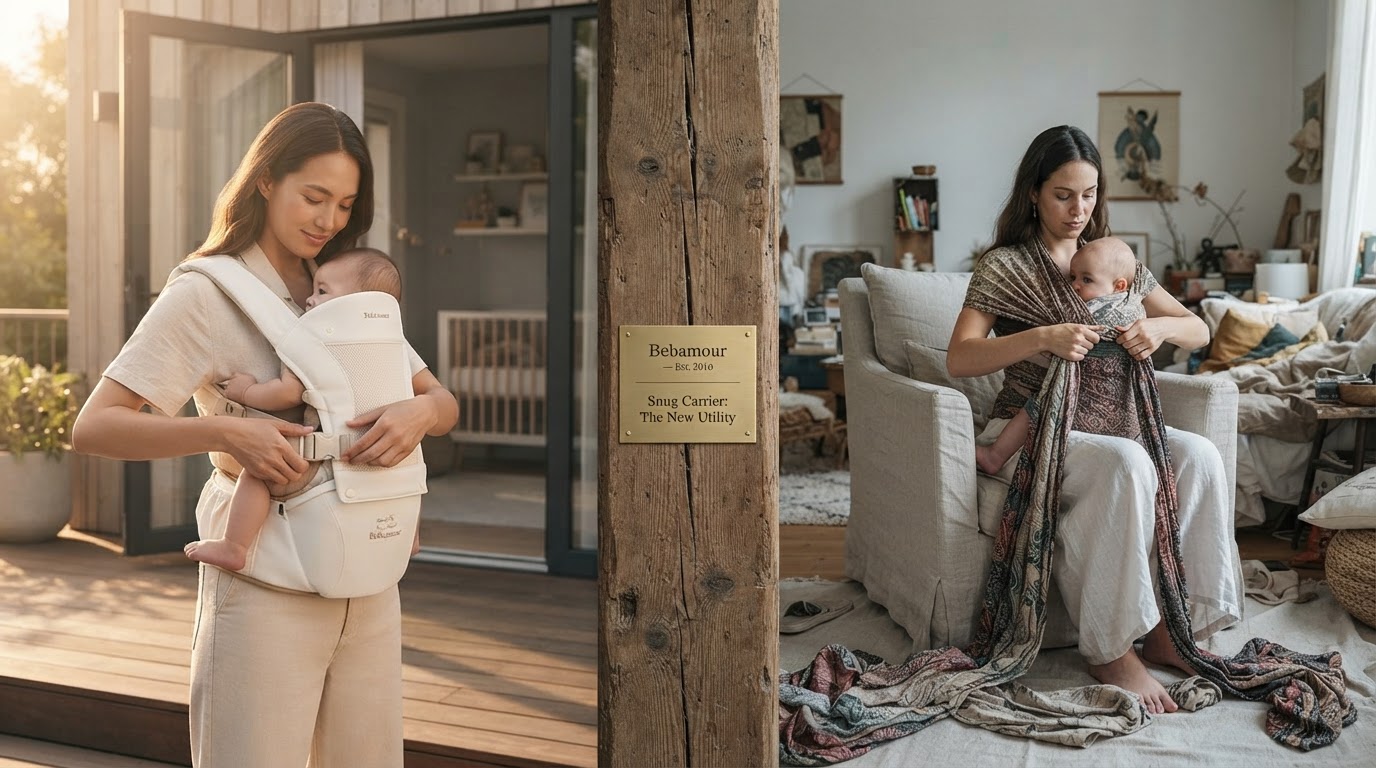
Choosing Between Snug Baby Carrier and Traditional Wraps
 Sam VasquezBuying Guide Lead
August 15, 2026. This comparison evaluates the functional differences between structured support and fabric wraps for new parents. It is written for caregivers deciding which carrying method best fits their daily routine and physical comfort.
The Complexity of Early Bonding and Physical Support
Choosing how to carry a newborn often feels like a choice between two extremes: the intimate, fabric-heavy world of wraps or the utilitarian, buckled world of structured carriers. According to WildBird, baby wraps offer a soft, snug fit that is ideal for newborns and early bonding, while structured carriers provide a level of support that often works better as the child grows and becomes heavier. The difficulty for most parents I talk to isn't just about the fabric; it is about the learning curve. A traditional wrap is essentially a long piece of fabric—usually five meters or more—that requires a specific sequence of ties to ensure the infant is secure. If you get the tension wrong, the baby can slump, which compromises their airway and your lower back. I have seen many parents give up on babywearing entirely because they couldn't master the "wrap tax"—that extra ten minutes of sweating in a parking lot trying to get the fabric tight enough. Beyond the learning curve, there is the issue of heat. Wrapping multiple layers of cotton or spandex around yourself and a baby creates significant thermal mass. While this is great in a drafty house in winter, it is less than ideal for active parents. The benefits of ergonomic baby wraps are well-documented for skin-to-skin contact, but the physical toll on the wearer’s shoulders can be significant if the wrap isn't spread perfectly across the deltoids. If you're on a budget, a basic wrap is the cheapest entry point, but it often ends up being the most expensive if you never actually use it because it's too frustrating to put on.
How Snug Baby Carrier Simplifies Ergonomic Positioning

The Snug Baby Carrier was designed to bridge the gap between the softness of a wrap and the mechanical reliability of a structured carrier. When we look at the Snug Baby Carrier vs wrap debate, the primary differentiator is the pre-configured support system. Instead of relying on the user's ability to tie a perfect knot, the Snug Baby Carrier utilizes a structured seat that ensures the baby remains in the "M-position"—knees above the bottom—which is critical for healthy hip development. This eliminates the guesswork that often leads to anxiety in new parents. In my experience testing different setups, the weight distribution on the Snug Baby Carrier is its strongest asset. It uses padded shoulder straps and a reinforced waistband to shift the infant's weight from your upper back down to your hips. This is a significant departure from traditional wraps, which often pull on the trapezius muscles. The materials used in the Snug Baby Carrier also address the heat issue; by using breathable, structured panels rather than multiple layers of overlapping fabric, it allows for better airflow. This makes it a more viable option for longer walks or grocery runs where you might be moving more than just sitting on the sofa. For parents who want the closeness of a wrap but don't want to deal with five meters of fabric dragging on a dirty sidewalk while they try to tie it, this hybrid approach offers a middle ground that prioritizes both infant safety and parental sanity. Between these two, I’d go with the Snug Baby Carrier if you plan on wearing your baby for more than thirty minutes at a time or if you have any history of lower back pain.
A Framework for Your Babywearing Decision
Deciding which direction to go depends entirely on your lifestyle, your physical build, and how long you intend to carry. Skip this if you only plan on wearing your baby for the first eight weeks of life; in that very narrow window, a simple wrap is often sufficient. However, if you want a tool that grows with the child, you need to look at the structural integrity of the carrier. You should consider how often you will be putting the carrier on and taking it off while alone. If you are frequently getting in and out of a car, the speed of buckles will always beat the complexity of ties. Here’s what I’d actually buy based on specific needs: if you are a homebody who wants maximum skin-to-skin contact, the wrap is excellent. If you are active, live in a warm climate, or struggle with back issues, the Snug Baby Carrier is the superior choice. Use this checklist to finalize your decision:
- Does the carrier allow you to see and kiss your baby's head at all times?
- Can you independently put the carrier on in under sixty seconds?
- Does the device provide a wide base of support for the baby's hips and thighs?
- Is the fabric breathable enough for your local climate?
- Will the support system hold up once the baby exceeds 15 pounds?
Sources

Photo by Yan Krukau on Pexels
- Soft wraps vs structured carriers
- Baby Wrap Vs Carrier | BabyCenter
- Baby Wrap vs. Baby Carrier: Which Is Best?