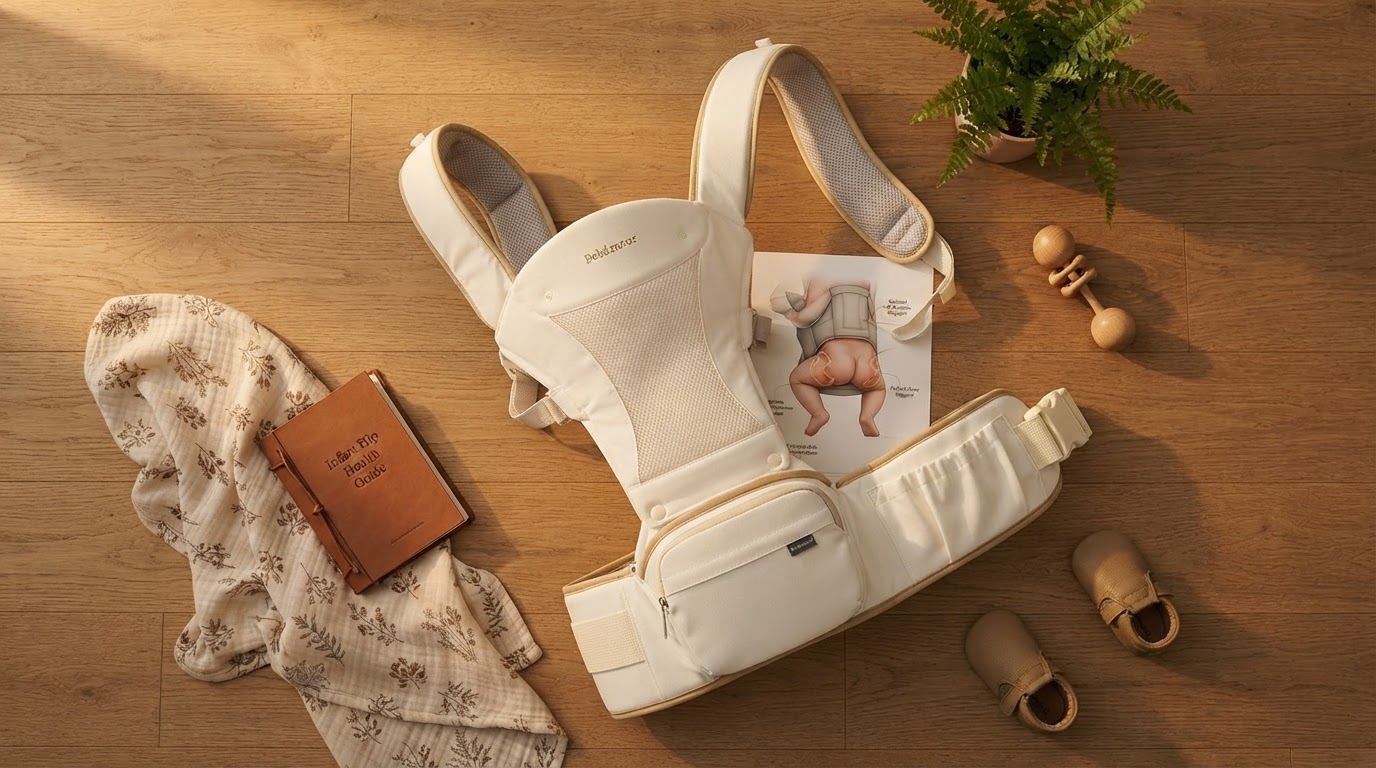
Supporting Hip Health with the Snug Baby Carrier
 Sam VasquezBuying Guide Lead
August 1, 2026. This guide details how to select and use a carrier that promotes healthy hip development in infants. It is intended for parents concerned about Developmental Dysplasia of the Hip (DDH) and those seeking ergonomic carrying solutions.
Understanding the Risks of Improper Hip Positioning
When I look at the mechanics of infant development, the first few months are critical for hip socket maturation. Newborns are naturally born with joints that are more flexible and cartilaginous than adults. If we force their legs into a straight, vertical position too early, we risk permanent damage. According to MedTruth, placing infants in carriers, wraps, or slings that hold their legs in a tight, straight position for long periods can negatively impact their hips, potentially leading to hip dysplasia. This condition occurs when the ball of the hip joint does not fit properly into the socket, leading to instability or dislocation.
I often see parents using narrow-base carriers where the baby's legs dangle straight down. This puts significant pressure on the hip joint because the weight of the legs pulls the femoral head away from the socket. The International Hip Dysplasia Institute (IHDI) emphasizes that the healthiest position is for the hips to fall or spread naturally to the side, with the thighs supported and the knees bent—a shape often referred to as the M-position or frog-leg position. It is vital to learn how to wear a Snug Baby Carrier safely to ensure this alignment is maintained every time you head out. Beyond just comfort, this is about skeletal integrity. If you are using a carrier that doesn't allow for this natural spread, you are essentially fighting against your baby's anatomy. While brands like BabyBjörn have worked to ensure their modern carriers are acknowledged as hip-healthy by the IHDI, many generic or older models still fail this basic ergonomic test. If you're on a budget, you might be tempted by second-hand narrow-base carriers, but the long-term orthopedic costs simply aren't worth the initial savings.
How the Snug Baby Carrier Maintains the M-Position

Photo by RDNE Stock project on Pexels
The Snug Baby Carrier is designed specifically to facilitate the "squat-spread" position recommended by orthopedic experts. Unlike rigid carriers that can force a baby's spine into an unnatural straightness, the soft fabric construction of the Snug allows the baby’s weight to be distributed across the buttocks and thighs rather than the crotch. This creates a deep seat where the knees are higher than the hips. The International Hip Dysplasia Institute notes that baby wraps and similar carriers generally promote the optimum position for hip health because they are highly adjustable to the specific size of the infant.
When comparing the Snug to a structured carrier like the BabyBjörn One, there are distinct differences in how they achieve hip health. The BabyBjörn uses a structured seat with adjustable toggles, which is great for older toddlers, but for a newborn, I find the Snug’s wrap-like flexibility provides a more customized fit. Between these two, I’d go with the Snug for the first six months because it conforms to the baby’s natural C-curve spine while ensuring the legs are never forced together. If you are specifically looking for an ergonomic baby wrap for infants, the Snug offers that hybrid balance of wrap-style fabric with the security of a structured carrier. It avoids the common pitfall of "crotch-dangling" by ensuring the fabric extends from knee-pit to knee-pit. This wide base of support is what keeps the femoral head securely seated in the acetabulum. Skip this if your child is already walking and prefers a back-carry position in a framed hiking pack; the Snug is optimized for front-carrying where hip monitoring is easiest for the parent. For those starting their journey, understanding how to wear a Snug Baby Carrier safely involves checking that the fabric isn't bunched up, which could inadvertently push the legs into a straighter, less healthy alignment.
A Framework for Choosing a Hip-Healthy Carrier

Photo by RDNE Stock project on Pexels
Choosing a carrier shouldn't be a guessing game. When I evaluate a product, I look for specific mechanical markers that guarantee the hips aren't under stress. Here is what I'd actually buy: a carrier that provides a wide seat, breathable fabric to prevent joint inflammation from overheating, and intuitive adjustments. If you are looking at different models, use this checklist to verify their safety for hip development:
- Wide Support Base: The fabric must support the baby from one knee-fold to the other. If the legs are dangling straight down, the base is too narrow.
- Knees Above Hips: When viewed from the front, the baby’s legs should form an 'M' shape. The knees should be slightly higher than the bottom.
- Fabric Tension: The material should be firm enough to hold the baby close to your center of gravity, preventing them from slumping, which can shift the hip angle.
- Adjustability: As the baby grows, the carrier must be able to widen. A hip healthy baby carrier for hip dysplasia must evolve with the infant’s leg length.
- Spinal Support: The carrier should support the natural C-curve of an infant’s back, which indirectly helps the hips stay in a tilted, forward-facing position.
Ensuring your baby is positioned correctly is a straightforward way to support their physical development. By prioritizing the M-position and using a carrier designed for ergonomic integrity, you provide a safe environment for your infant to grow.