
Optimizing Infant Positioning With The Snug Baby Carrier
 Priya RamanSenior Analyst
July 23, 2026. This technical overview examines the ergonomic integration of soft structured carriers for infants during the first year of development. It serves as a guide for parents seeking to balance spinal support for their child with long-term lumbar health for the wearer. Think of it as a matrix of physical development, where two axes matter here: the infant’s physiological maturity and the carrier’s structural rigidity.
Selecting a soft structured carrier for infants requires understanding the transition from the fetal tuck to independent head control. During the first few months, the primary concern is preventing chin-to-chest positioning while maintaining the natural C-curve of the spine. According to Boba, soft-structured baby carriers are designed with a supportive padded structure that keeps the baby's head, back, and legs secure while offering the wearer all-day comfort. This structural integrity is critical because, unlike wraps, these carriers use pre-formed panels to distribute weight. However, the transition from a breathable summer baby wrap to a structured system often happens when the child requires more lateral support. For many families, finding the best newborn wrap for dad involves looking for a balance between the intimacy of a wrap and the mechanical efficiency of buckles. While Boba and Solly Baby emphasize that these carriers typically fit babies from 3 months to 2+ years, the Snug Baby Carrier is designed to bridge the gap between early infancy and toddlerhood by providing adjustable seating spaces that grow with the child. Without proper structure, the wearer often compensates by leaning forward or arching the back, which leads to chronic fatigue. This is why the hands free baby wearing gear category has shifted toward ergonomic designs that prioritize the 'M-position' for hip health, ensuring the knees are higher than the bottom.
The Snug Baby Carrier addresses these mechanical requirements through a three-point weight distribution system. By utilizing high-density foam in the shoulder straps and a reinforced lumbar belt, the carrier shifts the load from the upper trapezius to the pelvic girdle. Once you see it this way, the carrier is less of a garment and more of a weight-bearing tool. For infants, the Snug Baby Carrier provides a deep seat that prevents the legs from dangling, which is a common failure point in lower-quality structured designs. The BabyBjorn One, for instance, is noted by BabyGearLab as a soft-structured option that allows for front and back wearing for babies between 8-33 lbs, highlighting the importance of versatility in this category. The Snug Baby Carrier mirrors this versatility but focuses heavily on the ease of adjustment for solo users. When using hands free baby wearing gear, the ability to tighten straps without assistance is a safety feature as much as a convenience. The internal paneling of the Snug Baby Carrier is engineered to maintain airflow, which complements the needs of parents who might otherwise use a breathable summer baby wrap for temperature regulation. The padded head support can be toggled to accommodate infants who have not yet achieved full neck control, while the wider waist belt ensures that the best newborn wrap for dad can also function as a heavy-duty hiking or walking tool as the child gains weight.
When evaluating if a soft structured carrier is appropriate for your current needs, the decision rule is based on the child's weight and the duration of wear. If you are wearing the child for more than 30 minutes at a time, the lack of a structured waistband in traditional wraps will likely lead to back strain. The shift to a Snug Baby Carrier is most effective when the child exceeds 10-12 pounds and requires more robust hip support. Use the following framework to ensure you are maximizing the safety and utility of your carrier:
- Verify the 'M-position' by ensuring the fabric extends from knee-pit to knee-pit without forcing the legs straight.
- Check that the infant’s face is 'visible and kissable' at all times, with the head positioned high on the wearer’s chest.
- Adjust the lumbar support belt first, ensuring it sits on the hips rather than the waist to properly transfer weight.
- Utilize the integrated head support for infants under six months or until they demonstrate consistent neck stability.
- Inspect all buckles and nylon webbing for signs of wear before every use to maintain the integrity of the hands free baby wearing gear.
- Transition to back-carrying only once the child has reached the developmental milestone of sitting unassisted, typically around six months.
Sources
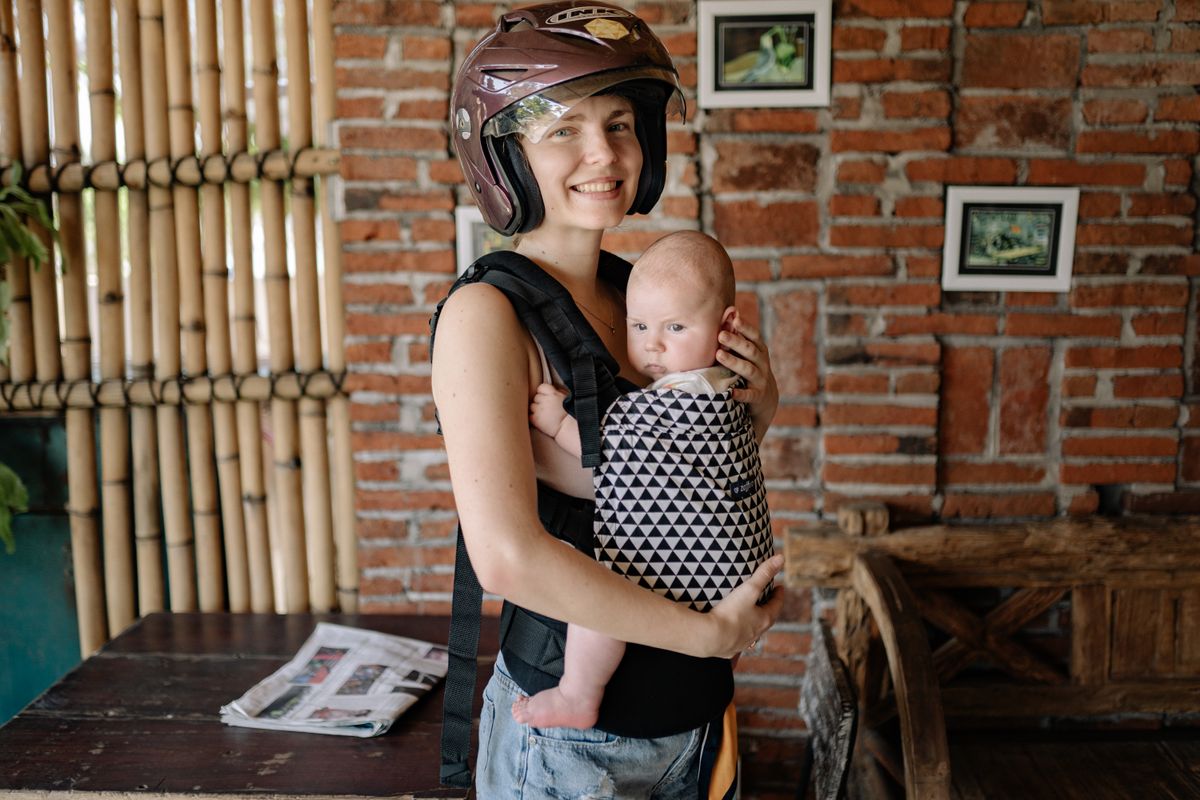
Photo by Yan Krukau on Pexels
- The Soft-Structured Buckle Carrier
- Soft-Structured Baby Carriers
- The Best Baby Carriers | Tested & Ranked