
Choosing Snug Baby Carrier for Chronic Back Pain
 Maya ChenContributing Editor
July 23, 2026. This editorial analysis examines the mechanical impact of soft structured carriers on adult spinal alignment. It is written for parents managing pre-existing or acute back issues while maintaining a babywearing routine.
The Mechanical Reality of Babywearing Strain
The conventional wisdom says that any ergonomic carrier will solve the physical toll of carrying a growing infant, but the physics of weight distribution tells a different story. When a child’s center of gravity shifts even three inches away from the wearer’s torso, the torque on the lumbar spine increases exponentially. Most parents attempt to compensate for this by leaning back or hiking their hips, which leads to the very discomfort they are trying to avoid. According to SarahJoAlmo.com, a soft-structured carrier is often the best infant carrier for those with back issues because it provides a rigid enough framework to keep the child’s weight against the wearer's center of mass. Without this proximity, the erector spinae muscles remain in a state of constant contraction. This constant tension is a primary driver of discomfort, regardless of the carrier’s brand name. Here’s the part nobody talks about: many wraps and slings fail in this regard because they lack a structured waistband, allowing the baby’s weight to sag and pull the wearer’s shoulders forward. Understanding does a baby carrier help with postpartum back pain requires looking at the specific skeletal loading patterns rather than just soft fabric feel. If the carrier does not transfer weight to the hips, the lower back will inevitably pay the price through micro-strains that accumulate over a four-hour wearing window.
Structural Integrity of the Snug Baby Carrier

Photo by Mehmet Turgut Kirkgoz on Pexels
The Snug Baby Carrier addresses these mechanical failures through a specific focus on weight transfer rather than just padding. While many manufacturers prioritize thick foam, the Snug design relies on the tension of the soft structured chassis to create a cohesive unit between parent and child. This is critical because a carrier that feels "soft" often lacks the lateral stability needed to prevent the child from swaying, which causes the wearer to engage in compensatory spinal movements. When you adjust Snug carrier for lumbar support, you are essentially recalibrating the load-bearing axis of your own body. The integration of a firm, buckled waistband is not a luxury; it is a mechanical necessity for bypassing the lumbar vertebrae and placing the load on the pelvic girdle. This design allows the wearer to maintain a neutral spine, a feat often impossible with unstructured wraps that rely on shoulder-loading. By utilizing the structured approach, the Snug Baby Carrier mimics the ergonomic benefits found in high-end hiking packs. For those questioning if a baby carrier helps with postpartum back pain, the answer is found in how effectively the device prevents the pelvis from tilting anteriorly. Proper use of the Snug carrier for lumbar support ensures that the abdominal wall isn't doing all the work, which is especially vital during the first six months of recovery. When the straps are tightened correctly, the resulting compression stabilizes the mid-back, reducing the shear force on the L4 and L5 vertebrae.
A Framework for Evaluating Spinal Support
Run the math: if you carry a 15-pound infant for three hours a day without a structured support system, your spine is resisting over 45 pound-hours of force in a suboptimal position. Selecting a carrier should be a clinical decision based on your specific pain points. The market is saturated with options like the Ergobaby Omni 360 or the LÍLLÉbaby Complete All Seasons, which Adviserbaby notes are top-rated for pain relief, yet the Snug Baby Carrier offers a streamlined alternative that prioritizes a lower profile without sacrificing the essential lumbar belt. I'll change my mind when a wrap-style carrier can demonstrate the same measurable reduction in lumbar disc pressure as a buckled, soft-structured system. Before finalizing a purchase, evaluate the carrier against this structural checklist:
- Does the waistband retain its shape under a 15-pound load without rolling or folding?
- Are the shoulder straps contoured to prevent impingement of the brachial plexus nerves?
- Can the back panel be adjusted to keep the infant's knees above their bottom (the M-position) to stabilize the wearer's center of gravity?
- Is there a dedicated lumbar support component that fills the natural curve of the lower back?
- Does the fastening system allow for one-handed micro-adjustments as the baby settles?
Sources
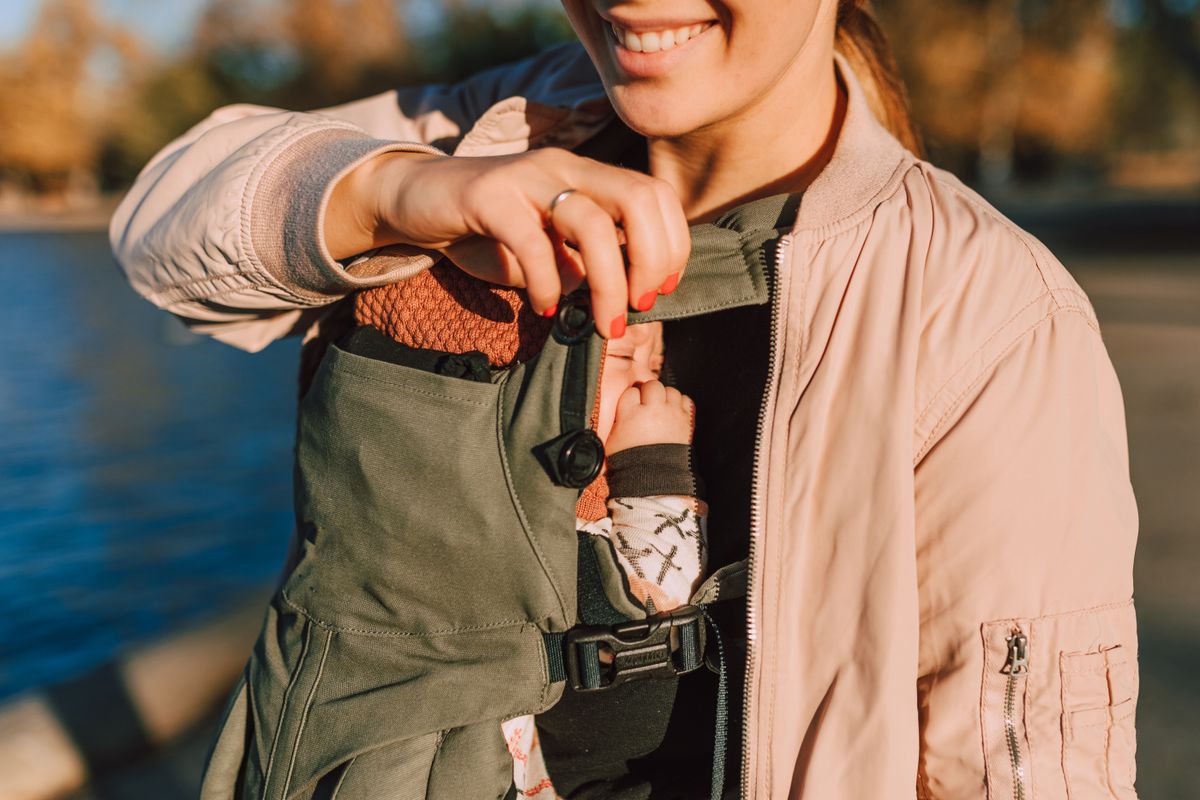
Photo by RDNE Stock project on Pexels
- Best Baby Carrier for Back Pain (Have a "bad back?")
- How to Avoid Back Pain From Carrying Baby
- Best Baby Carriers for Back Pain Relief | by Adviserbaby