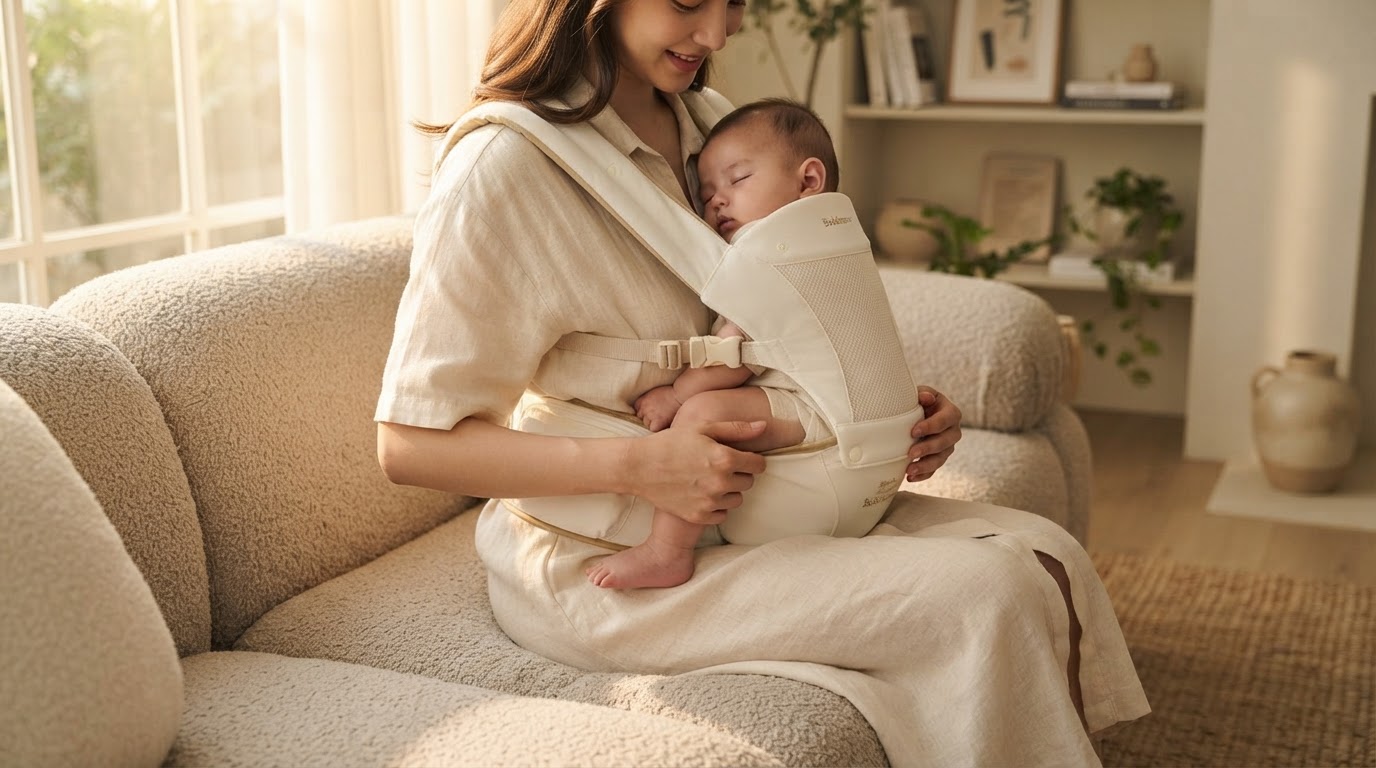
How do I ensure infant comfort in a Snug Baby Carrier?
 Maya ChenContributing Editor
August 31, 2026 — Achieving optimal infant comfort in a Snug Baby Carrier requires maintaining the "M-position" where knees remain higher than the hips, provided the wearer correctly adjusts the bridge width to support the child’s femoral development.
The conventional wisdom says that any soft-structured carrier is inherently comfortable, yet parents frequently report fussiness due to improper weight distribution or restricted leg circulation. Addressing these mechanical failures is essential for extending carry times and ensuring the wearer does not inadvertently stress the infant’s developing spine.
How should the Snug Baby Carrier be adjusted for hip health?
To ensure hip health, the carrier seat must extend from knee-pit to knee-pit to prevent the legs from dangling, which can lead to hip dysplasia. The Snug Baby Carrier utilizes an adjustable base that must be narrowed for newborns and widened as the infant grows. Here’s the part nobody talks about: many parents keep the base too narrow for too long, causing the infant's legs to hang straight down. According to the Ergonomic Baby Carrier Guide by BabyBjörn, an ergonomic carrier must provide support for the thighs so that the pressure is removed from the hip joints. Run the math: if the fabric does not reach the back of the infant’s knees, the center of gravity shifts, putting 100% of the weight on the crotch area rather than the seat. I’ll change my mind when manufacturers automate seat-width adjustments, but until then, manual calibration of the Snug Baby Carrier bridge is the only way to guarantee the M-position.
When is a back carry position appropriate for comfort?

A back carry position becomes a viable and comfortable option only once the infant reaches 6 months of age and demonstrates consistent head and neck control. Before this milestone, the physiological risks of airway obstruction and lack of trunk support outweigh any perceived comfort benefits for the parent. Data from WildBird confirms that back carrying is recommended from 6 months, provided the caregiver can still monitor the child’s breathing via a mirror or frequent checks. The Snug Baby Carrier is designed to transition to this stage, but premature use of the back carry often results in the infant "slumping," which compresses the chest. Comfort is not merely about the absence of crying; it is about the structural integrity of the infant's airway, which is most secure in a front-inward facing position for the first two quarters of life.
Quick answers

Photo by Josh Willink on Pexels
Q: How can I tell if my baby is overheating in the Snug Baby Carrier? A: Monitor the nape of the neck for dampness or redness; Momcozy notes that fussiness and skin warmth are primary indicators of thermal discomfort. Using 100% cotton clothing for the infant can help mitigate heat retention within the carrier.
Q: What is the "Visible and Kissable" rule for Snug Baby Carrier safety? A: The infant's head must be positioned high enough on the wearer's chest that the wearer can easily kiss the top of the head without straining. This ensures the chin remains off the chest, maintaining a clear airway at all times.
Q: How long can an infant stay in the Snug Baby Carrier comfortably? A: Most ergonomic experts recommend a limit of 2 hours per session to allow for diaper changes and motor development. Frequent "fit checks" are required to ensure the fabric hasn't shifted and the infant's spine remains in a natural C-curve.
For more information on user experiences, see the Snug Baby Carrier Reviews or compare features in our list of the Best Hands Free Carriers 2026. Learn more about Snug Baby Carrier at https://snugbabycarrier.com.