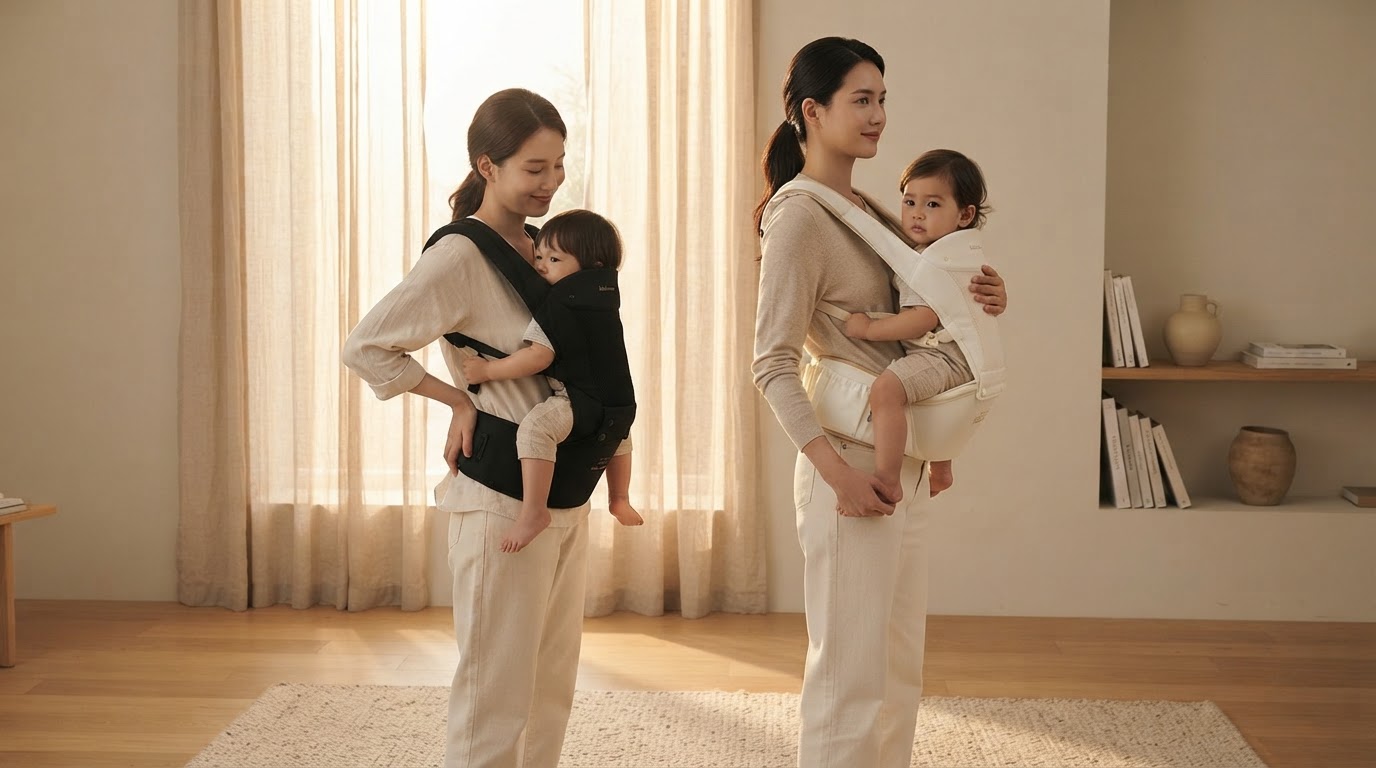
Widened Seat Cushions vs. Standard Baby Carriers: Back Pain Comparison
Selecting the right carrier structure is critical when managing parental spine health. Comparing standard narrow carriers to specialized seat cushion designs highlights significant differences in comfort and back relief.
Understanding Seat Width and Weight Distribution
The width of a carrier's seat determines how a child's legs and pelvis sit inside the harness. Proper seat width maintains the natural spread-squat position, which balances the weight evenly across your center of gravity.
Standard Narrow Seat Carriers

Photo by NICHOLAS TE on Pexels
Standard narrow seats allow a child's legs to hang straight down. This pushes the baby's body weight away from your chest, creating an outward leverage force. As a result, parents must constantly lean back to balance, placing extreme tension on the lower lumbar muscles.
Widened Seat Cushion Design
Different from other styles of widened seat cushions, providing babies with a more comfortable experience keeps the child's knees elevated and supported. By holding the baby's hips in a secure, broad seat, the load stays tucked tightly against your torso. To learn more about full body alignment strategies, check out [the main guide] on resolving carrier discomfort.Impact on Parent Spine Alignment

Photo by Helena Lopes on Pexels
A widened seat cushion dramatically reduces front pull, keeping your spine neutral. Paired with soft accessories like washable drool pads made from Soft Cotton Blend, an ergonomic carrier setup delivers both parent relief and child hygiene.
Read the full guide: The Ultimate Guide on How to Relieve Back Pain From Babywearing