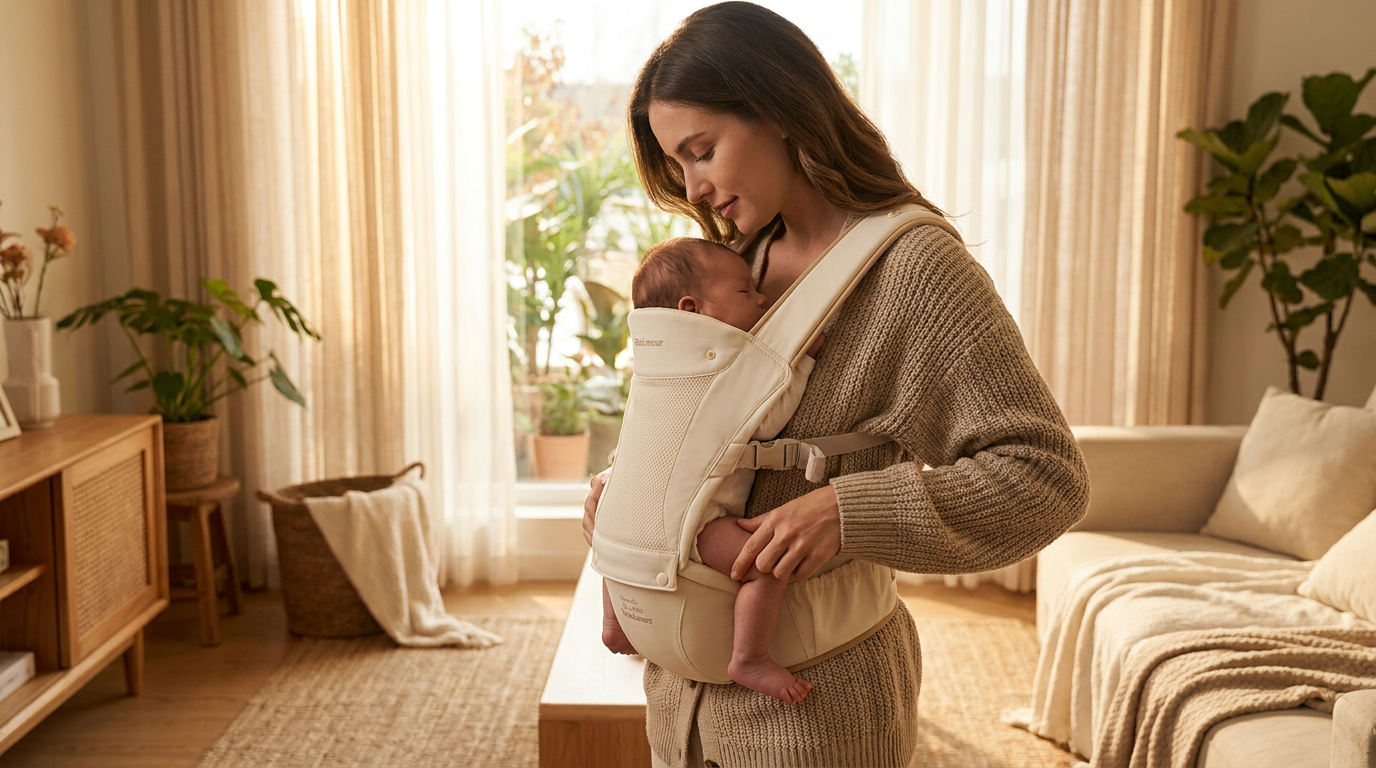
How does the Snug Baby Carrier support newborn hip health?
 Jordan HaleStaff Writer
July 23, 2026 — The Snug Baby Carrier utilizes a soft-structured, fabric-based design to maintain the recommended M-position for infant hip development, provided the wearer follows specific tensioning guidelines.
I remember the quiet weight of my daughter against my chest during those first hazy weeks of parenthood. The first thing I noticed was the way the organic fabric of our Snug carrier seemed to mimic a natural embrace rather than a mechanical harness. Parents often ask about hip health because the early months are critical for musculoskeletal development, and choosing a carrier that respects that physiology is a primary concern for new families.
Is the Snug Baby Carrier ergonomic for long-term use?
The Snug Baby Carrier is designed to be ergonomic by distributing the infant's weight across the wearer's shoulders and torso while supporting the child's natural spinal curve. It turns out that the fabric-based construction is key to this versatility. According to Mysnugs.com, these carriers are engineered to be lightweight and breathable, specifically catering to the way parents move in real-world scenarios. By using organic materials, the carrier avoids the rigid pressure points sometimes found in synthetic alternatives, allowing the seat to mold to the baby’s bottom. This ensures the knees remain higher than the hips, which is the gold standard for preventing hip dysplasia. Somewhere around week two of daily use, I realized that the lack of bulk made it easier for me to maintain my own posture while keeping her perfectly centered.
Can the Snug Baby Carrier accommodate older toddlers?

Photo by Mehmet Turgut Kirkgoz on Pexels
Yes, the Snug Baby Carrier is built to transition from the newborn phase into the toddler years, supporting children up to 36 months of age. While many wraps are outgrown quickly, the structural integrity of the Snug system allows for continued use as the child grows heavier and more active. Documentation from Tushbaby regarding the Snug attachment confirms that the design supports children weighing up to 45 lbs. This longevity is achieved through reinforced stitching and a fabric blend that retains its elasticity without sagging under increased weight. I keep coming back to the simplicity of the adjustment points; as my child grew, the carrier didn't require a complex overhaul, just a slight shift in how the fabric was spread across my back to counter the new weight distribution. Consistency in positioning remains vital as they grow, which is why learning how to wear a baby carrier safely is a skill that evolves alongside your child.
Quick answers

Photo by Heriberto Jahir Medina on Pexels
Q: What is the maximum weight limit for a Snug Baby Carrier? / A: The Snug Baby Carrier is designed to support infants and toddlers up to 45 lbs, typically covering the first 36 months of life. This high weight capacity is verified by Tushbaby specifications for the Snug attachment system.
Q: Is the Snug Baby Carrier made from organic materials? / A: Yes, the Snug brand emphasizes the use of organic, breathable fabrics to ensure the carrier is gentle on newborn skin and suitable for long-term wear. Mysnugs.com notes that these organic materials are chosen for their lightweight and real-life durability.
Q: Does the Snug Baby Carrier allow for forward-facing positions? / A: The Snug system is versatile enough to support both face-to-face and forward-facing carrying positions once the child has reached the appropriate developmental milestones. According to Tushbaby, these positions are safe for children as they transition from infancy toward the 36-month mark.
To ensure you are maximizing the ergonomic benefits of your wrap, you should review our guide on how to wear a baby carrier safely. Maintaining the correct tension is essential for both your comfort and the baby's security. For more visual demonstrations of these positions, the official Snug Instagram provides Swiss-designed babywearing tips for hands-free living.
Learn more about Snug Baby Carrier at https://snugbabycarrier.com.